
Introduction
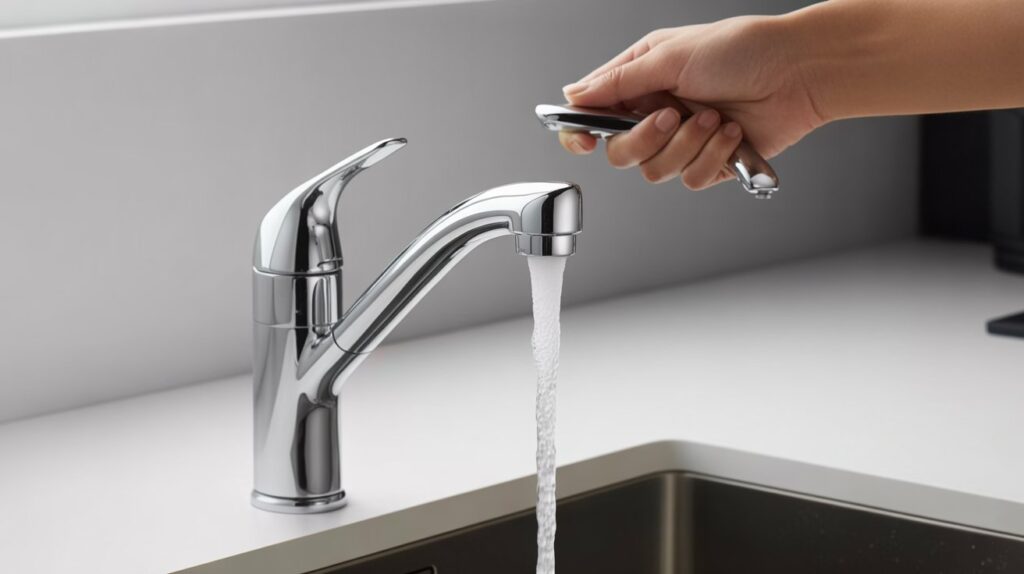
Water taps are an essential part of every home, yet many people do not fully understand the mechanism behind their daily use. From a gentle stream to a strong flow, a tap allows precise control with a simple movement of the handle. Learning how a tap controls water flow helps homeowners appreciate the engineering involved and identify problems before they become serious. Inside a tap, several small components work together to manage pressure, direction, and volume of water. When the handle is turned, these internal parts respond instantly to either release or stop the water supply. Different tap designs use different systems, but the purpose remains the same: smooth and reliable flow control. Understanding this process can also help in choosing the right tap for kitchens and bathrooms. It plays a key role in water efficiency and conservation. A properly working tap reduces water waste and improves daily convenience. In this article, we will explain the complete working process in a simple and easy way. By the end, you will clearly understand how a tap controls water flow in everyday use.
Table of Contents
Basic Working Principle of a Water Tap
The basic working principle of a water tap is based on controlling the movement of pressurized water inside plumbing pipes. To fully understand how a tap controls water flow, it is important to know that water is always ready to move through the system. When the tap is closed, an internal valve or sealing mechanism blocks the water path completely. This prevents any water from escaping through the spout. As soon as the user turns or lifts the handle, the internal valve begins to move away from its sealed position. This action creates an opening that allows water to pass through the tap body.
The size of this opening depends on how much the handle is turned. A small movement allows a limited amount of water to flow, while a full turn creates a wider passage for maximum flow. When the handle is moved back toward the closed position, the valve gradually reduces the opening. This slows the water flow until it stops completely. This smooth opening and closing process prevents sudden pressure changes. It also helps protect internal components from damage. This basic mechanism explains how a tap controls water flow efficiently in everyday household use.
Main Components That Control Water Flow in a Tap
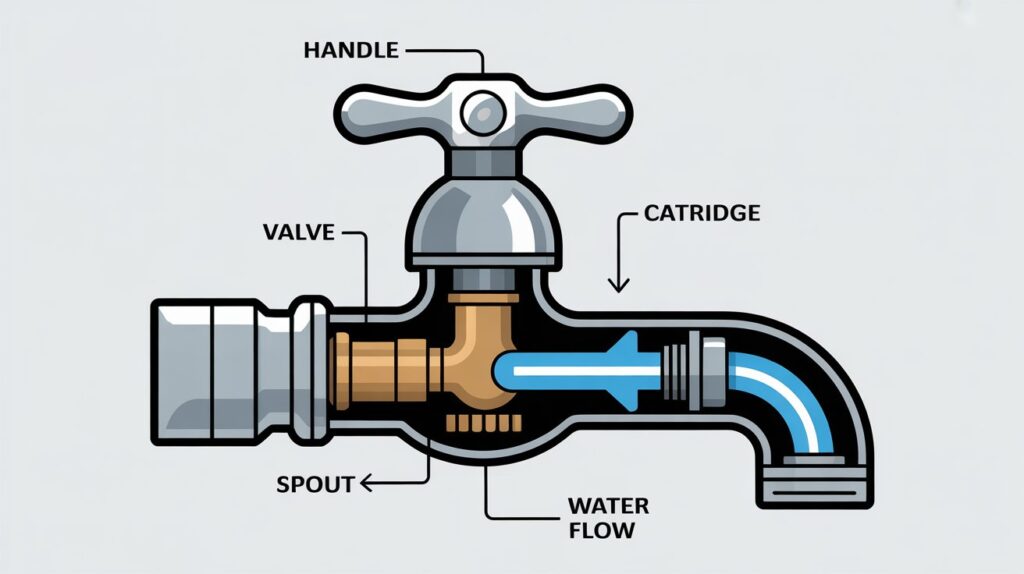
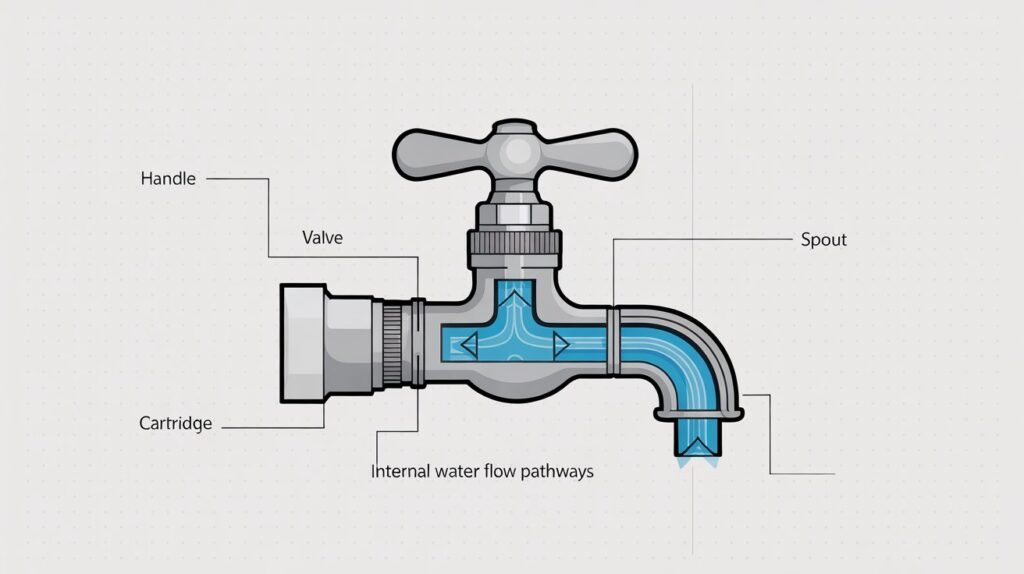
To clearly understand how a tap controls water flow, it is essential to know the key components working inside the tap. Each part plays a specific role in starting, stopping, and regulating the movement of water. The handle is the most visible component and is used to operate the tap. When the handle is turned or lifted, it activates the internal mechanism. Connected to the handle is the valve system, which controls the opening and closing of the water pathway. This valve is responsible for sealing the tap when it is closed and releasing water when it is opened.
Another important component is the cartridge or washer, depending on the tap type. In modern taps, cartridges are commonly used to regulate water flow smoothly and prevent leaks. Older taps often rely on rubber washers that press against a valve seat to stop water. The valve seat itself is a fixed surface that ensures a tight seal when the tap is closed. Inside the tap body, internal channels guide water toward the spout. Some taps also include aerators at the outlet, which help regulate flow and reduce splashing. All these components work together to ensure precise control, showing exactly how a tap controls water flow in daily use.
Role of the Valve in Controlling Water Pressure
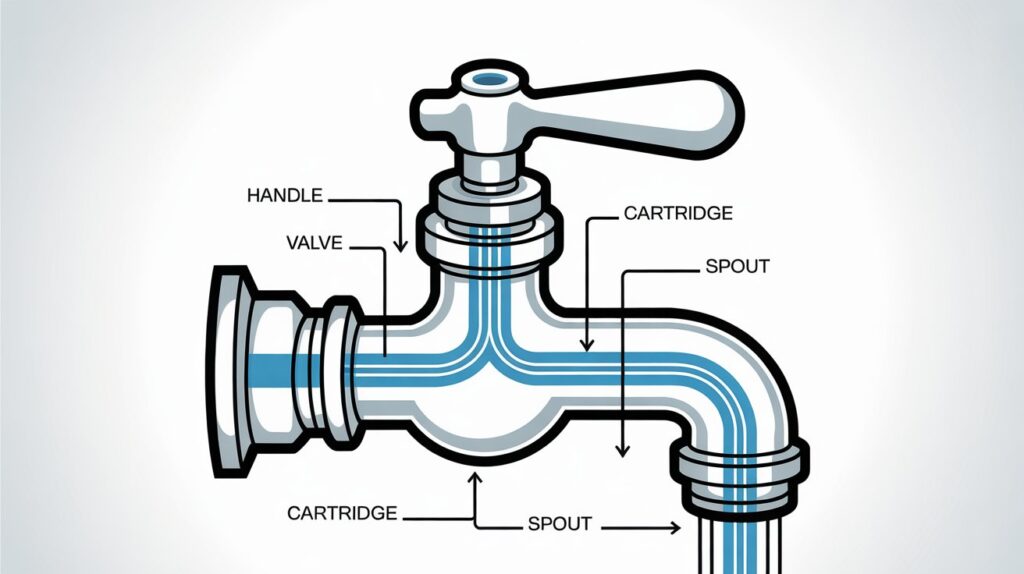
The valve is the heart of a tap when it comes to controlling water flow and pressure. Understanding how a tap controls water flow requires knowing the valve’s function in regulating the amount of water passing through the system. Inside the tap, the valve sits between the handle and the spout, acting as a gate that opens or closes depending on the handle’s position. When the handle is turned slightly, the valve creates a small opening, allowing a controlled amount of water to pass. This enables precise regulation of water pressure and flow. A fully open valve allows maximum water to pass through, while a partially open valve reduces the flow gradually.
Different tap designs use different types of valves. Compression taps use washers to press against the valve seat, stopping water completely when closed. Cartridge taps use a movable cartridge to adjust the flow smoothly. Ceramic disc taps employ two ceramic discs that slide against each other to regulate flow with precision. Ball taps use a rotating ball inside a chamber to mix hot and cold water and control pressure. By adjusting the valve, the tap not only controls flow but also maintains consistent water pressure, preventing sudden bursts or drips. This mechanism is fundamental to understanding how a tap controls water flow effectively and reliably in any household setting.
Different Types of Tap Mechanisms and Their Flow Control
To truly understand how a tap controls water flow, it’s important to explore the different types of tap mechanisms and how each regulates water in its own way. The design of the internal mechanism determines how smoothly water is released, how precise the control is, and how durable the tap will be over time. There are four main types of tap mechanisms widely used today: compression taps, ball taps, cartridge taps, and ceramic disc taps. Each type has unique features that affect how the handle movement translates into water flow.
Compression taps are the traditional style of taps. They use rubber washers that press against a valve seat to stop water completely. Turning the handle tightens or loosens this washer, allowing water to flow gradually. While simple and inexpensive, compression taps may wear out faster due to washer degradation and are prone to leaks if not maintained properly. Despite this, they provide clear visual control over flow: the more you turn the handle, the more water passes.
Ball taps are commonly found in kitchen sinks. They feature a rotating metal or plastic ball inside the tap body. The ball has openings that align with the water supply lines to control both flow and mixing of hot and cold water. A single lever usually operates a ball tap, making it easy to adjust both temperature and volume with one motion. The design allows smooth flow control but requires precise manufacturing to prevent leaks over time.
Cartridge taps use a movable cartridge inside the tap body. The cartridge moves when the handle is operated, opening or closing water channels. This provides smooth, consistent flow without the wear and tear associated with traditional washers. Cartridge taps are versatile, supporting single or dual handles, and they allow precise control of water volume and pressure.
Ceramic disc taps are among the most modern and reliable. They contain two ceramic discs that slide over each other to control water flow. When the handle is turned, the discs align to allow water to pass through and misalign to stop it. Ceramic discs are highly durable, resistant to leaks, and provide precise flow control. They are often used in high-end taps where smooth operation and longevity are priorities.
“If you’re experiencing issues with water flow, you may also want to read our guide on water pressure problems in faucet to understand common causes and solutions.
How Water Pressure Affects Tap Flow Control
Understanding how a tap controls water flow also requires knowing the impact of water pressure on its performance. Water pressure is the force that pushes water through the pipes and into the tap. When pressure is high, water flows out faster and stronger; when it is low, the flow can be weak or inconsistent. Even the best-designed tap cannot fully compensate for extreme pressure variations, which is why proper plumbing maintenance and design are essential for effective water flow control.
Taps are engineered to handle standard household water pressures, but different mechanisms respond differently. Compression taps rely heavily on water pressure to force water past the washer, so low pressure can result in a slow, uneven stream. Cartridge taps and ceramic disc taps are better at maintaining a steady flow even with slight pressure fluctuations, as their internal designs create smooth pathways for water movement. Ball taps, on the other hand, mix hot and cold water in a chamber where pressure differences can slightly affect flow consistency.
In addition to tap design, the user can partially control the effects of pressure. Adjusting the handle slowly allows the valve to regulate water gradually, preventing sudden bursts or splashing. Some modern taps also include flow restrictors or aerators to maintain consistent pressure, even in high-pressure systems. Understanding this relationship clarifies why certain taps feel smoother and more controllable than others. In essence, the interaction between water pressure and the tap’s internal mechanism is a key factor in explaining how a tap controls water flow efficiently in everyday use.
How a Tap Mixes Hot and Cold Water
An important aspect of understanding how a tap controls water flow is knowing how it manages the mixing of hot and cold water. Most modern taps are designed to allow precise temperature control while maintaining consistent flow. In single-handle taps, the handle not only regulates the amount of water but also its temperature. Moving the handle from side to side adjusts the balance between hot and cold water, while lifting or turning it controls the flow rate. This design allows users to achieve the desired temperature and volume simultaneously with one motion.
Double-handle taps work differently. Each handle controls either hot or cold water, requiring the user to adjust both handles to achieve the right mix and flow. Although slightly less convenient than single-handle taps, this system gives clear control over each water source. Inside the tap, mixing occurs in a chamber where the hot and cold water channels meet. The internal design ensures that the water combines thoroughly before exiting the spout, preventing sudden temperature changes or uneven flow.
Some advanced taps also include thermostatic cartridges, which automatically maintain a set temperature while adjusting flow. These are especially useful in showers or kitchen faucets, where consistent water temperature is crucial for comfort and safety. Aerators at the spout further regulate flow by mixing air with water, creating a smooth stream while minimizing splashing. By understanding this mechanism, it becomes clear how modern taps not only regulate water volume but also provide precise temperature control, showcasing exactly how a tap controls water flow in everyday use.
How Modern Taps Improve Water Flow Efficiency
Modern taps are designed not just to control water flow, but also to maximize efficiency and reduce wastage. Understanding how a tap controls water flow today involves looking at the innovations that make taps more effective than older designs. One major improvement is the inclusion of flow restrictors or aerators, which limit the amount of water coming out while maintaining strong, even pressure. This ensures that taps deliver sufficient flow for daily use without wasting excess water, making them environmentally friendly and cost-effective.
Advanced tap designs also use precision cartridges and ceramic disc mechanisms, which regulate water movement more smoothly than traditional washers. These systems reduce leaks and drips, which are a common source of wasted water. Additionally, many modern taps feature single-handle controls with built-in mixing chambers, allowing users to adjust temperature and flow efficiently with minimal effort. Some high-end models even include touchless sensors or electronic controls, which automatically adjust flow when hands or objects are detected, further improving efficiency.
Energy efficiency is another key factor in modern taps. By regulating flow and preventing unnecessary water heating, these taps help reduce both water and energy bills. Smart taps in kitchens and bathrooms can also monitor usage, helping households track and conserve water over time. The combination of internal engineering, aeration, precise flow control, and automation demonstrates exactly how a tap controls water flow efficiently while also conserving resources. Modern taps are a perfect example of how thoughtful design can balance convenience, performance, and sustainability.
Common Problems That Affect How a Tap Controls Water Flow
Even the best-designed taps can face issues that interfere with proper water flow. Understanding how a tap controls water flow also means recognizing the common problems that disrupt its performance. One of the most frequent issues is blockages caused by mineral buildup, dirt, or debris in the pipes or inside the tap itself. Over time, limescale can accumulate around the valve or aerator, reducing the water’s volume and creating uneven flow. This is especially common in areas with hard water.
Another common problem is worn washers or cartridges. In compression taps, rubber washers press against the valve seat to stop water. When these washers wear out, they can cause dripping, leaks, or inconsistent water flow. Cartridge taps and ceramic disc taps can also develop wear or damage over time, leading to difficulties in adjusting flow smoothly or achieving full water pressure.
Pressure fluctuations in the plumbing system can also affect tap performance. Low pressure can cause weak streams, while sudden high pressure may lead to splashing or valve strain. Leaks in the plumbing connected to the tap can reduce flow as well, making it seem like the tap itself is malfunctioning. Finally, improper installation or loose internal components can prevent the valve from seating correctly, causing water to flow uncontrollably even when the handle is closed.
By understanding these issues, homeowners can better diagnose problems and maintain proper water flow. Regular cleaning, replacing worn parts, and monitoring water pressure can ensure that taps continue to function effectively. Addressing these common problems is key to ensuring that your tap continues to show exactly how a tap controls water flow reliably in everyday use.
Signs That a Tap Is Not Controlling Water Flow Properly
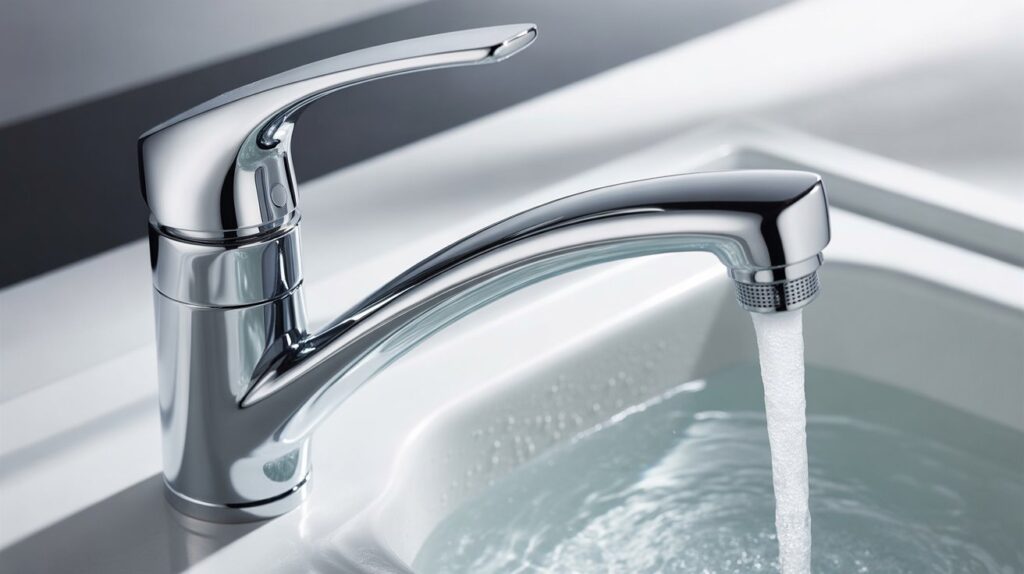
Recognizing when a tap is not functioning correctly is an important part of understanding how a tap controls water flow. Several signs indicate that the flow control mechanism is compromised, which can affect daily water use and efficiency. One of the most obvious signs is a dripping tap, which may result from worn washers, cartridges, or valves. Even a small drip can waste significant amounts of water over time and indicates that the internal mechanism is not sealing properly.
Another common sign is uneven or weak water flow. If water comes out in spurts or seems weaker than usual, it could be due to blockages, mineral buildup, or inconsistent water pressure. High-pressure surges causing splashing or sudden bursts from the tap can also indicate problems with the valve or internal components.
Noisy taps are another indicator. Grinding, squeaking, or rattling sounds during operation often point to worn or misaligned parts inside the tap. In some cases, difficulty turning the handle or adjusting temperature and flow smoothly is a clear warning that internal components are failing.
By observing these signs, homeowners can take timely action—cleaning aerators, replacing cartridges or washers, and checking plumbing connections—to restore proper function. Awareness of these issues ensures that your tap continues to demonstrate exactly how a tap controls water flow efficiently and reliably.
Maintenance Tips to Keep Proper Water Flow Control
Proper maintenance is crucial for ensuring that a tap continues to function efficiently and demonstrates exactly how a tap controls water flow over time. One of the simplest and most effective maintenance steps is regular cleaning of the tap and its components. Mineral deposits and debris can accumulate in the aerator, valve, and spout, reducing water flow and creating uneven pressure. Removing and cleaning these parts periodically helps maintain smooth operation.
Another key maintenance practice is checking and replacing worn washers or cartridges. Compression taps rely on washers to seal the valve, while modern cartridge or ceramic disc taps use cartridges for flow regulation. Over time, these components wear out and need replacement to prevent leaks, drips, and flow inconsistencies. Ensuring that all internal parts are properly aligned and secured during installation or repair also prevents issues with water control.
Monitoring water pressure in the home is equally important. Excessively high pressure can damage tap components, while low pressure may reduce flow efficiency. Installing pressure regulators or flow restrictors can help maintain optimal performance. Additionally, being gentle with handle movements prevents unnecessary strain on the internal mechanisms, extending the life of the tap.
Finally, using the tap according to its design—avoiding harsh chemicals for cleaning and ensuring that hot and cold water adjustments are smooth—helps maintain consistent water flow. Following these maintenance tips not only preserves the tap’s longevity but also ensures that you continue to experience precise control, showing exactly how a tap controls water flow efficiently and reliably every day.
How Understanding Tap Flow Control Helps Save Water
Learning how a tap controls water flow is not just about understanding its mechanics—it also has practical benefits for water conservation and efficiency. When homeowners know how taps operate, they can use them more effectively, reducing unnecessary water wastage. For example, partially opening a tap instead of running it fully for minor tasks can save a significant amount of water over time. Understanding the handle and valve mechanism allows for precise adjustments, ensuring only the required volume of water is used.
Proper knowledge of tap flow control also helps identify leaks or drips early. Even a small, continuous drip can waste thousands of liters of water annually. By knowing which components control flow and pressure, a homeowner can replace washers, cartridges, or clean aerators to fix the problem promptly. Modern taps with flow restrictors or aerators further enhance water-saving efforts by maintaining strong water pressure while using less water per minute.
Moreover, understanding tap flow control contributes to energy efficiency. Efficiently controlling hot water flow prevents unnecessary heating, lowering energy consumption and bills. For households aiming to conserve water and energy, proper tap use and maintenance become critical. By combining knowledge, careful operation, and modern technology, users can ensure that taps deliver optimal performance while saving resources, demonstrating exactly how a tap controls water flow in a sustainable way.
Frequently Asked Questions (FAQs)
1. How does a tap control water flow?
A tap controls water flow through an internal valve mechanism. Turning or lifting the handle moves the valve away from its seat, creating an opening for water to pass. The degree of handle movement determines how much water flows out.
2. Why is my tap flow weak sometimes?
Weak flow can be caused by blockages, mineral buildup, worn washers or cartridges, or low water pressure in your plumbing system.
3. What are the main types of tap mechanisms?
The most common types are compression taps, ball taps, cartridge taps, and ceramic disc taps. Each type uses a different internal mechanism to regulate water flow and pressure.
4. How does water pressure affect a tap?
Water pressure directly influences the strength and consistency of flow. High pressure can cause splashing, while low pressure results in weak, uneven streams.
5. How can I maintain my tap for better flow control?
Regularly clean aerators and internal components, replace worn washers or cartridges, monitor water pressure, and handle the tap gently to avoid internal damage.
6. Can modern taps save water?
Yes. Modern taps with flow restrictors, aerators, or touchless technology are designed to maintain strong flow while using less water, improving efficiency and reducing wastage.
Conclusion
Understanding how a tap controls water flow is essential for both effective water use and long-term tap performance. A tap may look simple from the outside, but inside, it contains a carefully designed system of valves, cartridges, washers, and channels that work together to regulate flow and pressure. By learning how these components function, homeowners can identify issues like leaks, drips, or weak water streams and take timely action to fix them. Modern taps, with advanced mechanisms such as ceramic discs, cartridges, and flow restrictors, not only offer smooth and precise flow control but also improve water efficiency and conserve energy. Regular maintenance, including cleaning aerators and replacing worn parts, ensures consistent performance and prevents unnecessary water wastage. Additionally, understanding how handle movement affects water output helps in using taps responsibly, which contributes to both cost savings and environmental conservation. Knowledge of water pressure impact and the differences between tap types further empowers users to select and operate taps optimally. Overall, a well-maintained and properly used tap delivers comfort, reliability, and efficiency in everyday life, clearly demonstrating how a tap controls water flow in households around the world.