
Introduction
Understanding the difference between tap and faucet is important if you are planning a home upgrade, reading plumbing guides, or simply confused by the two terms. While both words are often used interchangeably, they actually reflect regional language preferences and design trends rather than functional differences. In this article, we will clearly explain what sets a tap apart from a faucet, how each term is used around the world, and which option may be best for your kitchen or bathroom needs.
Table of Contents
Definition & Basic Meaning
The difference between tap and faucet starts with their basic definitions and how the terms are commonly understood. In simple words, both a tap and a faucet refer to a device that controls the flow of water, but the terminology changes based on language and region rather than function.
A tap is a general term widely used in British English and many other parts of the world. It refers to any fixture that allows water to flow when turned on and stops when turned off. Taps are commonly associated with bathrooms, kitchens, outdoor water points, and wash basins.
A faucet, on the other hand, is the term mostly used in American English. It has the same core purpose as a tap—controlling water flow—but is more commonly linked with modern plumbing systems, especially in kitchens and bathrooms. In the US, the word “faucet” is standard for almost all indoor water fixtures.
So, when looking at the difference between tap and faucet, the key point is this:
They mean the same thing functionally, but the name changes depending on regional language usage.
Regional Usage
The difference between tap and faucet becomes clearer when we look at how each term is used in different regions. The distinction is mostly linguistic, not functional.
In the UK, Australia, and many Commonwealth countries, the word tap is the standard term. People commonly say water tap, bathroom tap, or kitchen tap when referring to a water-controlling fixture. The term is deeply rooted in British English and is used in both everyday language and plumbing terminology.
In contrast, the United States and Canada primarily use the word faucet. In American English, faucet is the accepted and widely understood term for the same water fixture found in kitchens, bathrooms, and utility areas. The word tap is still understood in the US, but it is far less common in daily usage.
Understanding this regional difference helps explain why people often search for the difference between tap and faucet—the variation is based on geographical language preference, not design or purpose.
Language & Terminology Differences
The difference between tap and faucet is strongly influenced by language and terminology rather than any technical distinction. Both words describe the same plumbing fixture, but they come from different linguistic backgrounds.
The term tap originates from British English and is derived from older words meaning to draw or release liquid. It is a simple, traditional term that remains widely used in everyday conversation across many countries.
The word faucet comes from American English and has roots in French, originally referring to a small spout or opening. Over time, it became the standard term in the US for modern water fixtures, especially those used indoors.
From a technical and functional perspective, there is no mechanical difference between the two. Plumbers, manufacturers, and homeowners all refer to the same device, just using different words. This explains why the difference between tap and faucet is mostly about terminology and regional language, not performance or structure.
Design & Appearance
When discussing the difference between tap and faucet, design and appearance are often thought to be major factors, but in reality, the variation depends more on style trends than terminology.
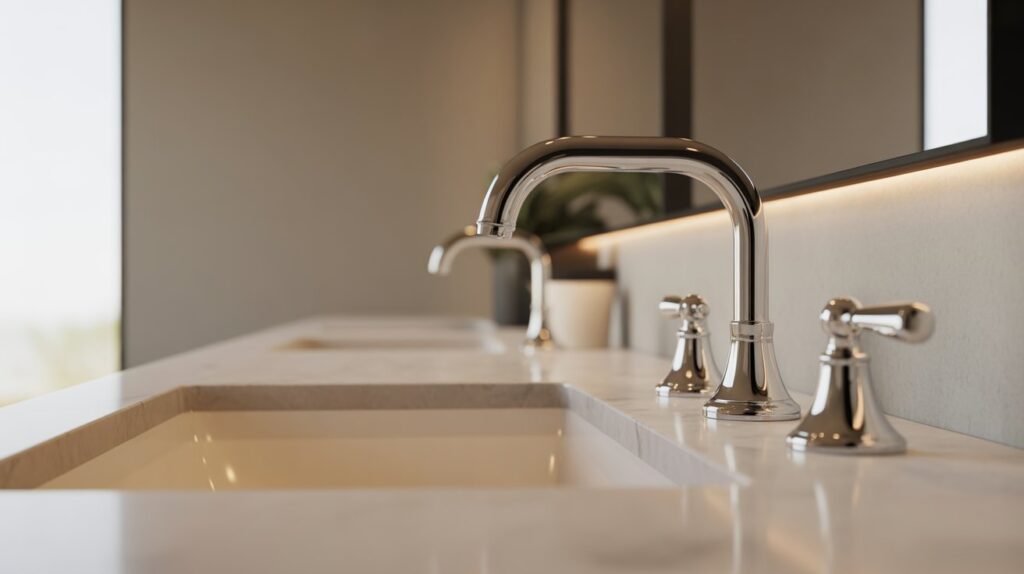
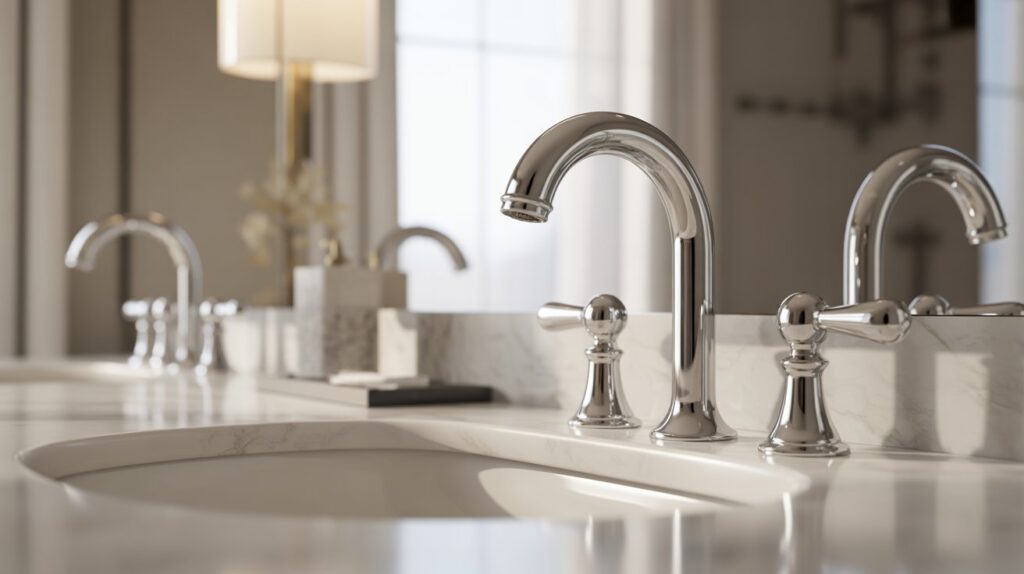
Taps are often associated with simple or traditional designs, especially in regions where British English is used. They commonly feature separate controls for hot and cold water and are frequently seen in classic bathroom or utility settings.
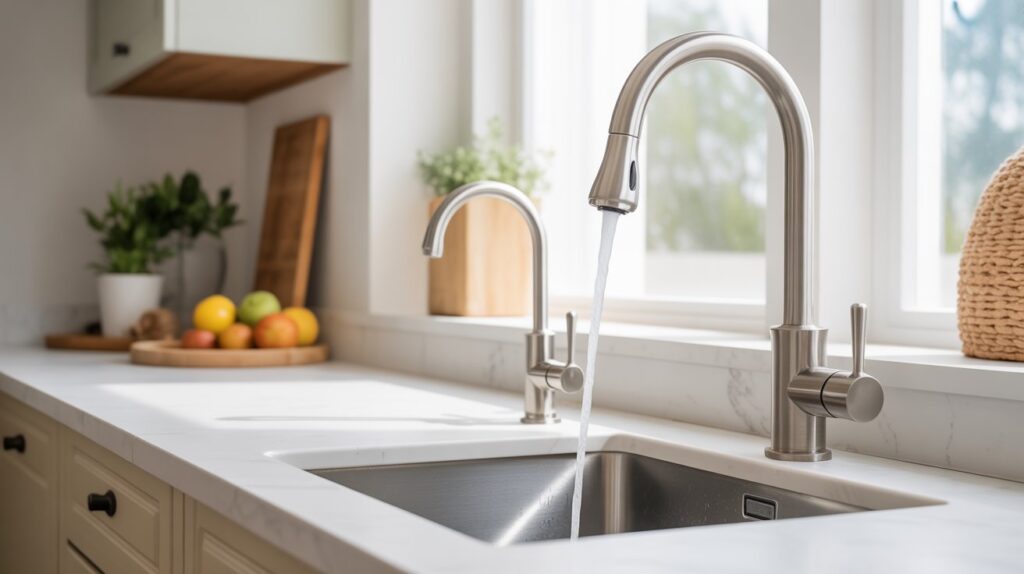
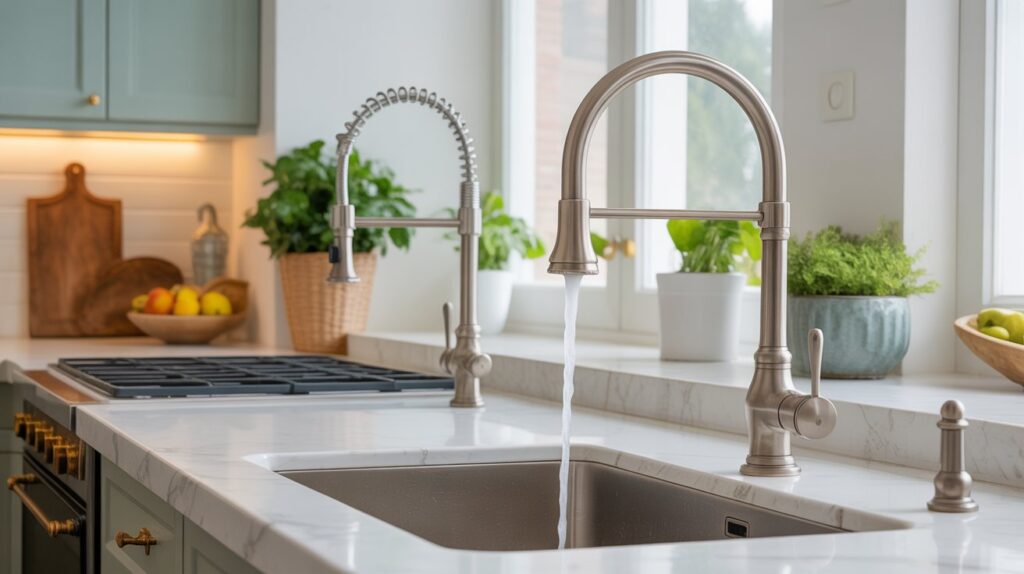
Faucets, on the other hand, are commonly linked with modern and stylish designs, particularly in American markets. They often include sleek finishes, single-handle controls, pull-out sprayers, or touchless features, making them popular in contemporary kitchens and bathrooms.
Despite these style differences, the core function remains the same. The difference between tap and faucet in terms of appearance is influenced by regional design preferences and market trends, not by a fixed rule in plumbing.
Installation Location
Another way to understand the difference between tap and faucet is by looking at where each term is commonly used based on installation location.
The word tap is often used for water fixtures installed in a wide range of places, such as bathrooms, wash basins, gardens, laundry areas, and outdoor water points. In many regions, any outlet that supplies water—indoors or outdoors—is casually referred to as a tap.
In comparison, faucet is typically used to describe indoor water fixtures, especially those installed in kitchens and bathrooms. In American English, outdoor water outlets are more often called hose bibs or spigots rather than faucets.
This usage pattern highlights that the difference between tap and faucet is not about how or where the device works, but about how people describe water fixtures in different environments.
Functionality & Water Control
The difference between tap and faucet is not functional—both devices serve the same purpose: controlling the flow of water. However, there are slight variations in terminology when describing features in different regions.
A tap traditionally refers to a fixture where water flow is controlled manually, often using twist handles or levers to turn the water on or off. Some taps have separate controls for hot and cold water, allowing users to mix them to the desired temperature.
A faucet can also be manual, but in modern contexts, it often includes advanced water control features such as single-handle mixing, sensor-activated flow, or pull-out sprayers for convenience. Despite these added features, the core principle remains the same: a faucet is simply a type of tap with modern enhancements.
In short, when considering functionality, the difference between tap and faucet lies mainly in design updates and features, not in the basic purpose of controlling water.
Types & Variations
Understanding the difference between tap and faucet also involves looking at the various types available in different regions. While the terms are often used interchangeably, certain types are more commonly associated with one term over the other.
Types of Taps:
- Bib taps: Commonly used outdoors or in utility areas.
- Compression taps: Traditional taps with separate hot and cold controls.
- Mixer taps: Combine hot and cold water in one spout.
Types of Faucets:
- Single-handle faucets: Popular in kitchens and bathrooms for easy temperature control.
- Pull-out or pull-down faucets: Include extendable spouts for convenience.
- Touchless or sensor faucets: Modern technology allowing hands-free water control.
The difference between tap and faucet in terms of types mainly reflects regional terminology and design innovations, rather than functional differences. Essentially, a faucet is a modern or American term for types of taps that include advanced features.
Materials Used
The difference between tap and faucet can also be observed in the materials commonly used for manufacturing them, though functionally both serve the same purpose. The choice of material often depends on regional preferences and design trends.
Taps—especially traditional ones—are often made from brass, stainless steel, or chrome-plated metals. In outdoor or utility settings, taps may also be made of durable plastics to resist corrosion.
Faucets, particularly modern or American-style ones, frequently use high-quality brass, stainless steel, or brushed nickel. Some premium faucets also include ceramic or composite finishes for a sleek, luxurious appearance in kitchens and bathrooms.
In essence, the difference between tap and faucet regarding materials is minor; both prioritize durability and corrosion resistance. The variation mostly reflects design preferences and market trends in different regions.
Technology & Features
The difference between tap and faucet is often highlighted when looking at technology and additional features, even though both serve the same basic purpose of controlling water flow.
Traditional taps are generally simple, mechanical devices. Most taps use twist handles or levers to control water, and advanced technology is rarely included in older or classic designs.
Modern faucets, especially in American English usage, often come with advanced features such as:
- Single-lever temperature control
- Pull-out or pull-down spray heads
- Touchless or sensor activation
- Water-saving aerators
While taps can also incorporate some of these features in contemporary designs, the term faucet is more commonly associated with modern, technology-enhanced water fixtures.
Thus, when comparing the two, the difference between tap and faucet in technology lies primarily in modern enhancements and convenience features, not in the basic function of dispensing water.
Ease of Use
The difference between tap and faucet can also be understood in terms of ease of use, although both are designed to control water flow efficiently.
Taps, especially traditional models, often feature two separate handles—one for hot water and one for cold. While effective, this design may require some effort to adjust the temperature accurately. Classic taps are simple but may not offer the same convenience as modern designs.
Faucets, particularly modern or American-style ones, are often designed with user-friendly features. Single-lever faucets allow quick temperature adjustment with one hand, while touchless faucets activate automatically, making them convenient and hygienic. Pull-out or pull-down faucets also make tasks like washing dishes or filling large containers easier.
In short, while both taps and faucets perform the same basic function, the difference between tap and faucet in ease of use is mainly about modern design improvements and convenience features.
If your tap is leaking and needs a quick solution, check out our step-by-step guide on how to fix dripping tap for easy and effective repairs.
Maintenance & Repair
Another important aspect when comparing the difference between tap and faucet is maintenance and repair. While both devices control water, their upkeep can vary slightly based on design and terminology.
Taps, especially traditional models, are generally simple to maintain. Common issues include leaking washers, corroded spindles, or loose handles, all of which can usually be fixed with basic tools. Their straightforward design makes repairs easier and more affordable.
Faucets, particularly modern or feature-rich models, may include cartridges, aerators, sensors, or pull-out mechanisms. While these add convenience, they can make maintenance slightly more complex. Repairs may require specific replacement parts, and some advanced models might need professional servicing.
Overall, the difference between tap and faucet in maintenance is not about functionality but complexity of design. Taps tend to be simpler, while faucets may require a bit more attention due to advanced features.
Price Range & Cost Comparison
The difference between tap and faucet can also be seen in their price range, although both are available in options for every budget.
Taps, particularly traditional or basic models, are generally more affordable. Simple designs without extra features make them cost-effective for bathrooms, kitchens, or outdoor use. Replacement parts for taps are also usually inexpensive and easy to find.
Faucets, especially modern or feature-rich ones, often come at a higher price point. Advanced features such as single-lever controls, pull-out spouts, touchless sensors, or high-end finishes can increase the cost. However, many faucets also offer premium durability, aesthetic appeal, and convenience, which can justify the investment.
In summary, the difference between tap and faucet in cost is mainly linked to design complexity and additional features, not the basic functionality of controlling water flow.
Durability & Lifespan
The difference between tap and faucet can also be considered in terms of durability and lifespan. Both are designed to provide long-term water control, but the materials and construction can influence how long they last.
Taps, especially traditional models, are often made from durable metals like brass or stainless steel. Their simple mechanical design with fewer moving parts means they tend to last longer with minimal maintenance. Outdoor taps and utility taps are built to withstand harsh conditions.
Faucets, particularly modern or feature-rich ones, may include additional components such as cartridges, sensors, or pull-out spouts. While high-quality faucets are built to last, more advanced features can require extra care, and some parts may need replacement over time.
Ultimately, the difference between tap and faucet regarding durability is minor; both can be long-lasting if made from quality materials. The main distinction lies in maintenance needs due to advanced features in faucets.
Water Efficiency
The difference between tap and faucet can also be observed in water efficiency, especially in modern plumbing designs. While both control water flow, faucets often come with features aimed at saving water.
Taps, particularly traditional models, usually rely on basic manual controls. They allow users to regulate water flow, but without specialized mechanisms, water can be wasted if the tap is left running or not adjusted properly.
Faucets, especially modern ones, often include water-saving technologies such as:
- Aerators that mix air with water to reduce flow without reducing pressure
- Sensor-activated or touchless operation to prevent unnecessary water use
- Flow restrictors for controlled water output
Therefore, the difference between tap and faucet in water efficiency is mainly about modern features. Faucets tend to offer better water-saving options, while traditional taps focus on basic functionality.
Which One Should You Choose?
When deciding between a tap and a faucet, understanding the difference between tap and faucet can help you make the right choice for your home or project.
If you prefer traditional simplicity, cost-effectiveness, and easy maintenance, a tap is ideal. It works reliably for bathrooms, kitchens, outdoor areas, and utility spaces, and it requires minimal attention over time.
If you want modern features, convenience, and stylish design, a faucet is the better option. Faucets offer advanced technology such as single-lever controls, pull-out spouts, touchless activation, and water-saving mechanisms, making them perfect for contemporary kitchens and bathrooms.
Ultimately, the difference between tap and faucet comes down to regional terminology, design preferences, and additional features, not the basic function of delivering water. Choosing the right one depends on your needs, style preference, and budget.
FAQs About the Difference Between Tap and Faucet
Here are some common questions that help clarify the difference between tap and faucet:
1. Are taps and faucets the same thing?
Yes. Functionally, they both control the flow of water. The difference is mainly regional terminology.
2. Why do some countries use “tap” and others use “faucet”?
It’s a matter of language preference, not design.
3. Can a faucet be called a tap?
Yes. In many regions, especially the UK, a faucet would still be referred to as a tap, even if it has modern features.
4. Do taps or faucets save more water?
Modern faucets with aerators, sensors, or flow restrictors can be more water-efficient than traditional taps.
5. Which is easier to repair, a tap or a faucet?
Traditional taps are usually simpler to repair due to fewer components, while modern faucets may require specific parts or professional help.
6. Are faucets more expensive than taps?
Generally, yes. Faucets with advanced features or premium designs cost more than standard taps.
7. Does the choice affect durability?
Not significantly. Both taps and faucets are durable if made from quality materials, though modern faucets may need extra maintenance due to added features.
Conclusion
Understanding the difference between tap and faucet helps clear a lot of common confusion. In reality, both terms refer to the same water-controlling fixture, and the main difference lies in regional language usage, not functionality. The word tap is commonly used in British English and many other regions, while faucet is the preferred term in American English. Design, features, price, and technology may vary, but the core purpose remains the same. Whether you choose a traditional tap or a modern faucet depends on your style preference, budget, and convenience needs, not on any major technical difference.