
Introduction
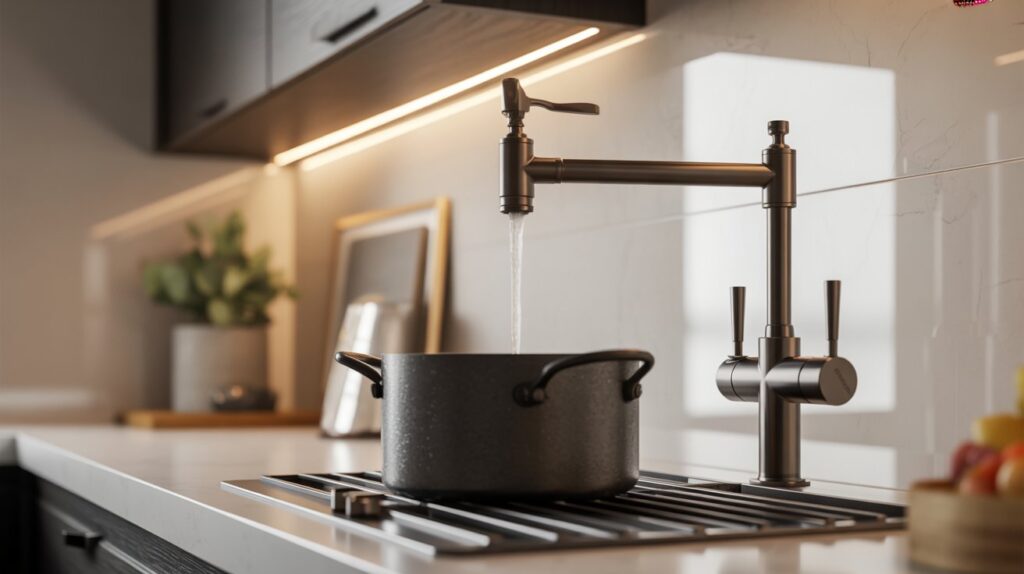
A pot filler faucet is a convenient kitchen fixture that allows you to fill large pots directly on the stove, saving time and reducing spills. With a wide variety of designs, finishes, and features available, choosing the right pot filler faucet can be overwhelming. In this guide, we’ll compare the top models, highlighting key factors such as build quality, reach, performance, and ease of use to help you find the perfect faucet for your kitchen.
Table of Contents
Overview of Each Pot Filler Faucet
Choosing the right pot filler faucet starts with understanding what each model brings to your kitchen. While all pot fillers serve the same basic purpose—filling large pots directly on the stove without carrying heavy containers—their performance, construction, and features can vary a lot. Some models are built from premium solid brass for long-term durability, while others focus on lightweight stainless steel designs that resist corrosion and stains. You’ll also find options with smooth dual-handle systems for better water control, as well as single-valve models made for quick and simple use.
Different brands offer unique advantages. Some prioritize extended reach for oversized cooking ranges, while others provide compact foldable arms perfect for small kitchens. Advanced models may include drip-free valves, high-flow performance for fast pot filling, or modern finishes like matte black and brushed gold to match your kitchen aesthetic. Understanding these variations helps you compare design quality, functionality, and user convenience across all available options. By reviewing each pot filler faucet individually, you’ll be better prepared to choose the one that fits your cooking habits, space requirements, and long-term reliability needs.
Build Quality & Materials
The build quality and material selection of a pot filler faucet play a major role in determining how long it will perform reliably in your kitchen. Most high-quality models are constructed from solid brass, which is known for its exceptional durability and resistance to corrosion. Brass faucets tend to handle high temperatures well and maintain their internal strength over many years of daily use. Some manufacturers also use stainless steel, which offers excellent rust resistance and provides a lightweight feel without compromising on strength. Stainless steel models are often preferred in modern kitchens due to their sleek appearance and long-lasting shine.
In addition to the base material, the exterior finish also matters. Popular finishes include brushed nickel, chrome, matte black, and brushed gold. These finishes not only improve the overall look of the faucet but also add an extra layer of protection against scratches, water spots, and discoloration. High-end models use multi-layer plating to ensure the finish remains vibrant even after constant exposure to heat, moisture, and cleaning chemicals. When choosing the right pot filler faucet, always check whether the manufacturer uses lead-free materials, premium internal cartridges, and certified construction standards.
Design & Aesthetic Appeal
The design and aesthetic appeal of a pot filler faucet can transform the overall look of your kitchen, especially if you’re aiming for a modern and stylish cooking space. Most pot fillers feature a sleek, foldable arm design that sits above the stove, providing both functionality and a professional chef-kitchen vibe. Different brands offer various design styles, ranging from minimalist straight-arm models to more detailed, traditional options with decorative joints and rounded edges. These design choices allow homeowners to match their faucet with their cabinetry, appliances, and overall kitchen theme.
Color and finish also play a major role in aesthetics. Popular finishes include matte black, brushed gold, brushed nickel, chrome, and stainless steel. Matte black gives a bold, modern touch, while brushed gold offers a luxurious and warm appearance. Chrome and stainless steel remain timeless choices that blend well with most kitchen layouts. Many models now incorporate smooth swivel joints to enhance both design and movement flow, making the faucet look more refined while improving practicality.
A well-designed pot filler faucet not only improves your cooking convenience but also enhances the visual appeal of your kitchen by acting as a stylish focal point.
Reach, Spout Length & Range of Motion
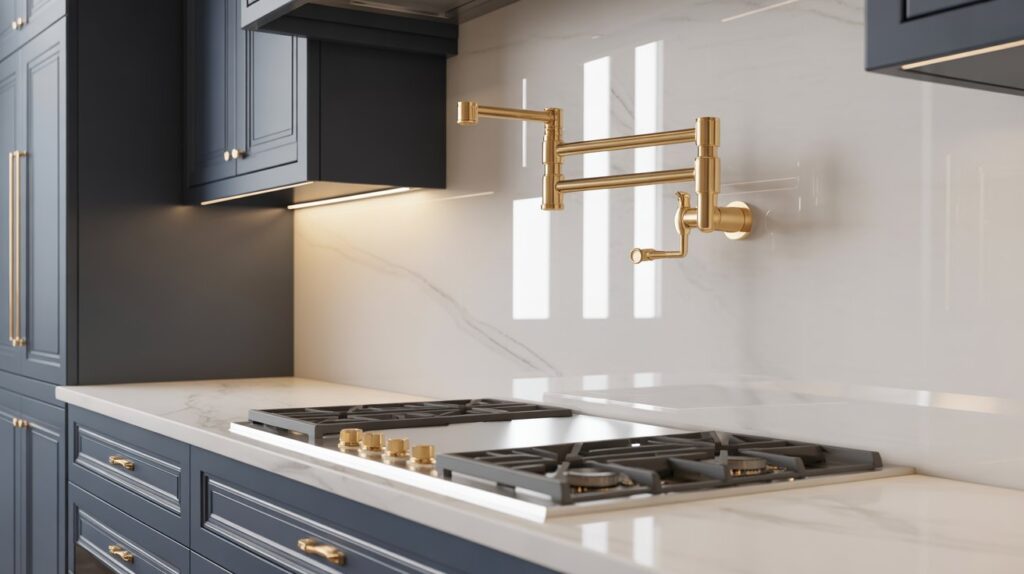
The reach, spout length, and overall range of motion of a pot filler faucet are some of the most important factors to consider when comparing different models. Since pot fillers are installed above the stove, the length of the extendable arm determines how easily you can fill large pots placed across multiple burners. Most high-quality models offer a reach between 20 to 24 inches, which is ideal for standard and wide stovetop layouts. Longer reach provides greater flexibility, while shorter designs work well in compact kitchens with limited wall space.
Many modern pot fillers come with double-jointed arms, allowing the faucet to fold neatly against the wall when not in use. This not only saves space but also enhances safety by keeping the faucet out of the cooking zone. Smooth swiveling joints are essential, as they enable effortless movement without stiffness or wobbling. Some premium models even use advanced internal bearings to ensure fluid motion throughout the faucet’s lifespan. A reliable pot filler faucet should extend smoothly, retract easily, and maintain stability during use. Choosing the right combination of reach and mobility helps ensure the faucet fits your kitchen layout perfectly.
Flow Rate & Performance
The flow rate and overall performance of a pot filler faucet directly affect how quickly you can fill large cooking pots, especially when preparing soups, pasta, or boiling water for bulk recipes. Most pot fillers offer a high flow rate between 2.0 to 4.0 gallons per minute (GPM), allowing them to deliver water much faster than regular kitchen faucets. A higher GPM means less waiting time, which is particularly useful for busy kitchens or households that cook frequently. However, choosing the right flow rate depends on your plumbing setup and personal preferences.
Performance also includes how smoothly the faucet operates. Premium models feature ceramic disc cartridges that ensure drip-free functionality and consistent water output. This not only prevents leaks but also helps maintain stable water pressure. Some pot fillers even include reinforced valves designed to handle high-heat environments near stovetops. The internal aerator also plays a role by regulating water flow to ensure a steady, splash-free stream.
When evaluating performance, check whether the pot filler faucet maintains consistent pressure, operates smoothly, and delivers reliable flow without dripping. A well-performing model should combine speed, stability, and durability to make everyday cooking more efficient.
Installation Requirements
Understanding the installation requirements of a pot filler faucet is essential before choosing the right model for your kitchen. Since pot fillers are typically mounted above the stove, they require a dedicated cold-water supply line positioned at the proper height. Most installations place the connection 16–24 inches above the cooktop, depending on the reach and arm design of the faucet. Ensuring correct placement is important because it affects how comfortably you can fill pots without obstruction. Homes without a pre-installed water line may need a plumber, which can increase the total project cost.
Another key installation factor is the type of wall the faucet will be mounted on. Pot fillers are heavier than standard faucets due to their extended arms and solid construction, so they must be anchored to strong studs or proper support brackets. Many models also require Teflon tape, shut-off valves, and secure threading to prevent leaks. Some advanced designs come with dual-valve systems, which add an extra safety layer but require precise plumbing alignment.
Before buying, check the manufacturer’s installation diagram to confirm wall spacing, plumbing compatibility, and mounting requirements. A properly installed pot filler faucet ensures stable performance, safety, and long-term reliability.
Ease of Use & Handle Mechanism
The ease of use and handle mechanism are critical factors when evaluating a pot filler faucet, as these features directly impact daily convenience in the kitchen. Most pot filler faucets are equipped with either single or dual-handle systems. Single-handle designs allow for quick and simple water control, often requiring just one motion to start or stop the flow. Dual-handle models provide more precise temperature and flow adjustments, which can be helpful when filling delicate dishes or controlling water volume for specific recipes.
Smooth movement and ergonomic handles also enhance user experience. Premium models often feature swivel joints that rotate effortlessly, allowing the faucet to extend or retract without resistance. Handles are typically designed with rounded or lever styles to provide comfortable grip and easy operation, even with wet or soapy hands. Some high-end models incorporate long, easy-to-turn valves to reduce strain and increase usability.
When selecting a pot filler faucet, consider the combination of handle type, motion smoothness, and ergonomic design. A well-designed handle mechanism ensures effortless operation, faster pot filling, and better control over water flow, making your kitchen tasks more efficient.
Durability & Long-Term Reliability
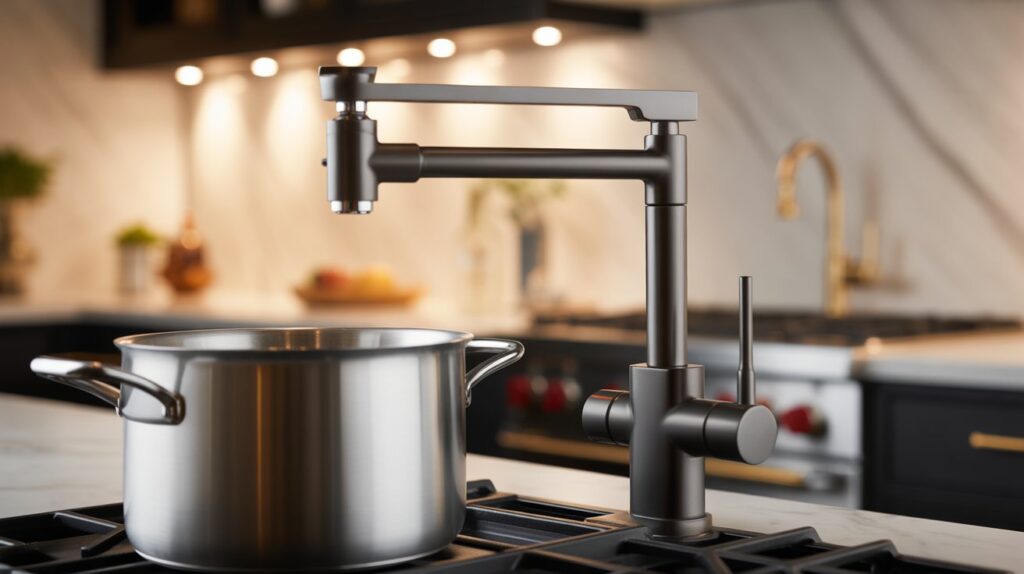
Durability and long-term reliability are key considerations when choosing a pot filler faucet, as this fixture will see frequent use and high temperatures above the stove. The materials and construction quality directly affect how long the faucet will perform without leaks, corrosion, or joint instability. High-quality models typically use solid brass or stainless steel for both the body and internal components, ensuring resistance to wear and heat damage. These materials also help maintain smooth operation over time, even with repeated swiveling of the faucet arm.
The internal valves and cartridges play an equally important role in durability. Premium ceramic disc cartridges prevent dripping and withstand daily use for years without degradation. Reinforced joints and sturdy mounting brackets add extra stability, reducing the risk of loosening or wobbling. Some manufacturers even offer extended warranties, reflecting confidence in their product’s long-term performance.
When evaluating a pot filler faucet, check for lead-free construction, corrosion-resistant finishes, and robust internal components. Selecting a durable model guarantees that your investment will last for many years, providing reliable service and smooth operation. A durable faucet also reduces maintenance needs and helps maintain your kitchen’s functionality and aesthetic appeal.
For related plumbing tips, check out our guide on how to repair a leaky bathtub faucet to prevent leaks and maintain your bathroom fixtures.
Safety Features
Safety features are an essential consideration when choosing a pot filler faucet, especially since these faucets are installed above the stove where hot surfaces and boiling liquids are common. Many high-quality models come with built-in anti-drip valves to prevent water from leaking after use, reducing the risk of accidental spills and burns. Some faucets also include reinforced swivel joints that lock securely in place to prevent the arm from moving unintentionally while filling large pots.
Additional safety enhancements may include long, heat-resistant handles that allow users to operate the faucet without touching hot areas, as well as dual-valve systems that offer precise water control. These features not only prevent accidental water wastage but also minimize the risk of burns or splashes during cooking. Choosing faucets with certified construction standards ensures that all components are safe for everyday kitchen use.
When evaluating a pot filler faucet, always look for features that enhance user protection, prevent leaks, and ensure controlled water flow. A faucet with well-designed safety mechanisms provides peace of mind while handling heavy pots, boiling water, or high-pressure flows.
Maintenance & Cleaning
Proper maintenance and easy cleaning are crucial factors for a pot filler faucet, as these faucets are constantly exposed to water, heat, and kitchen debris. Regular cleaning helps prevent mineral buildup, water spots, and corrosion, ensuring the faucet remains fully functional and visually appealing. Most high-quality models feature smooth, durable finishes like brushed nickel, chrome, or matte black that resist staining and simplify cleaning. Wiping the faucet with a soft cloth and mild soap after each use is usually sufficient to maintain its appearance.
Internal components also require occasional maintenance. Ceramic disc cartridges are designed for long-lasting use, but checking for leaks or drips periodically ensures the faucet continues to operate efficiently. Some models allow easy access to the cartridges for replacement without requiring professional plumbing assistance. Proper lubrication of swivel joints may also be recommended for extended arm designs to maintain smooth motion.
When selecting a pot filler faucet, consider models that offer low-maintenance finishes, easy-to-clean surfaces, and accessible internal components. A faucet that is simple to maintain not only reduces long-term upkeep but also ensures consistent performance, extending the life of your investment.
Price & Value for Money
Price and value for money are important factors when deciding on the best pot filler faucet for your kitchen. Pot fillers range from budget-friendly models under $100 to high-end options exceeding $500, depending on materials, design, and advanced features. While lower-cost faucets may look appealing, they often compromise on durability, finish quality, or valve performance. On the other hand, premium models offer solid brass construction, long-lasting finishes, and smooth operation, providing a better long-term investment.
It’s also important to consider the value provided by additional features. Extended reach, double-jointed arms, drip-free valves, and stylish finishes can significantly enhance usability and kitchen aesthetics. Some faucets include warranties or certifications that guarantee safety and durability, which adds extra value. Comparing multiple models helps you find a balance between price and functionality without overpaying.
When evaluating a pot filler faucet, focus not just on the upfront cost but also on long-term reliability, material quality, and ease of use. A slightly higher investment often saves money over time by reducing maintenance needs and ensuring a durable, stylish fixture.
Customer Reviews & Real User Experiences
Evaluating customer reviews and real user experiences can provide valuable insights when selecting a pot filler faucet. While specifications and marketing claims highlight the features of a faucet, actual users can reveal how it performs in everyday cooking scenarios. Many reviewers focus on ease of installation, the smoothness of the swivel arm, and whether the faucet consistently delivers water without leaks. Positive reviews often praise models with high-quality materials, solid construction, and finishes that resist tarnishing over time.
Negative feedback can also be informative, helping you identify potential drawbacks. Common issues mentioned by users include stiff joints, dripping after prolonged use, or difficulty in cleaning tight corners. Reading a variety of reviews ensures you get a realistic perspective on the faucet’s performance and durability.
Some brands also include video demonstrations or tutorials, showing the faucet in action, which can help visualize its reach, range of motion, and overall usability. By analyzing these experiences, you can make an informed decision and choose a pot filler faucet that combines durability, style, and functionality to suit your kitchen.
Frequently Asked Questions (FAQs) About Pot Filler Faucet
1. What is a pot filler faucet?
A pot filler faucet is a wall-mounted or stove-adjacent faucet designed to fill large pots directly on the stove. It saves time and effort by eliminating the need to carry heavy pots from the sink.
2. How do I install a pot filler faucet?
Installation requires a dedicated water supply line near the stove. Most models are wall-mounted and may require professional plumbing, especially if there is no pre-existing line.
3. Can a pot filler faucet handle hot water?
Yes, most pot filler faucets are designed to handle both hot and cold water. High-quality models use heat-resistant materials like brass or stainless steel to ensure durability near stovetops.
4. Are pot filler faucets easy to clean?
Yes. Faucets with smooth finishes like brushed nickel, chrome, or matte black are easy to wipe down and maintain. Regular cleaning prevents mineral buildup and keeps the faucet looking new.
5. Do pot filler faucets leak easily?
High-quality models with ceramic disc valves and reinforced joints typically prevent leaks. Proper installation is key to avoiding dripping or loose connections.
6. How do I choose the best pot filler faucet for my kitchen?
Consider reach, spout length, material, design, ease of use, and customer reviews. A well-built pot filler faucet should combine functionality, durability, and style to match your kitchen needs.
Conclusion
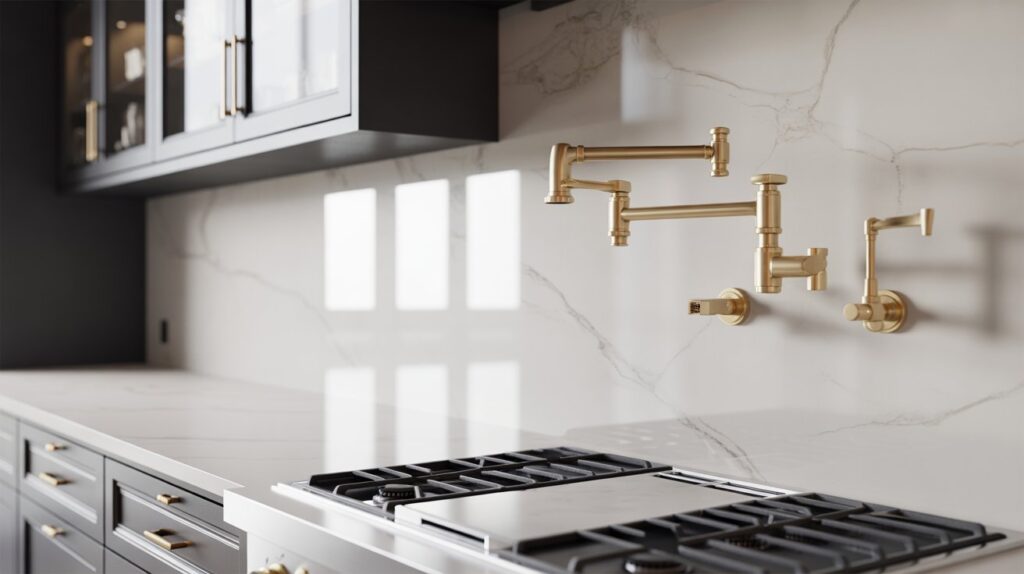
Choosing the right pot filler faucet can significantly improve both the functionality and style of your kitchen. By carefully considering factors such as build quality, reach, design, flow rate, ease of use, and customer feedback, you can select a faucet that meets your cooking needs while enhancing your kitchen’s aesthetic appeal. Whether you prioritize durability, smooth operation, or modern finishes, the ideal pot filler faucet combines convenience, reliability, and long-term value, making it a practical and stylish addition to any home